Physical therapy
ends at discharge.
Pilates begins there.
Physical therapy and Pilates are not the same thing — and they are not in competition. Understanding the difference helps you build the complete recovery your body deserves.
Book a Session →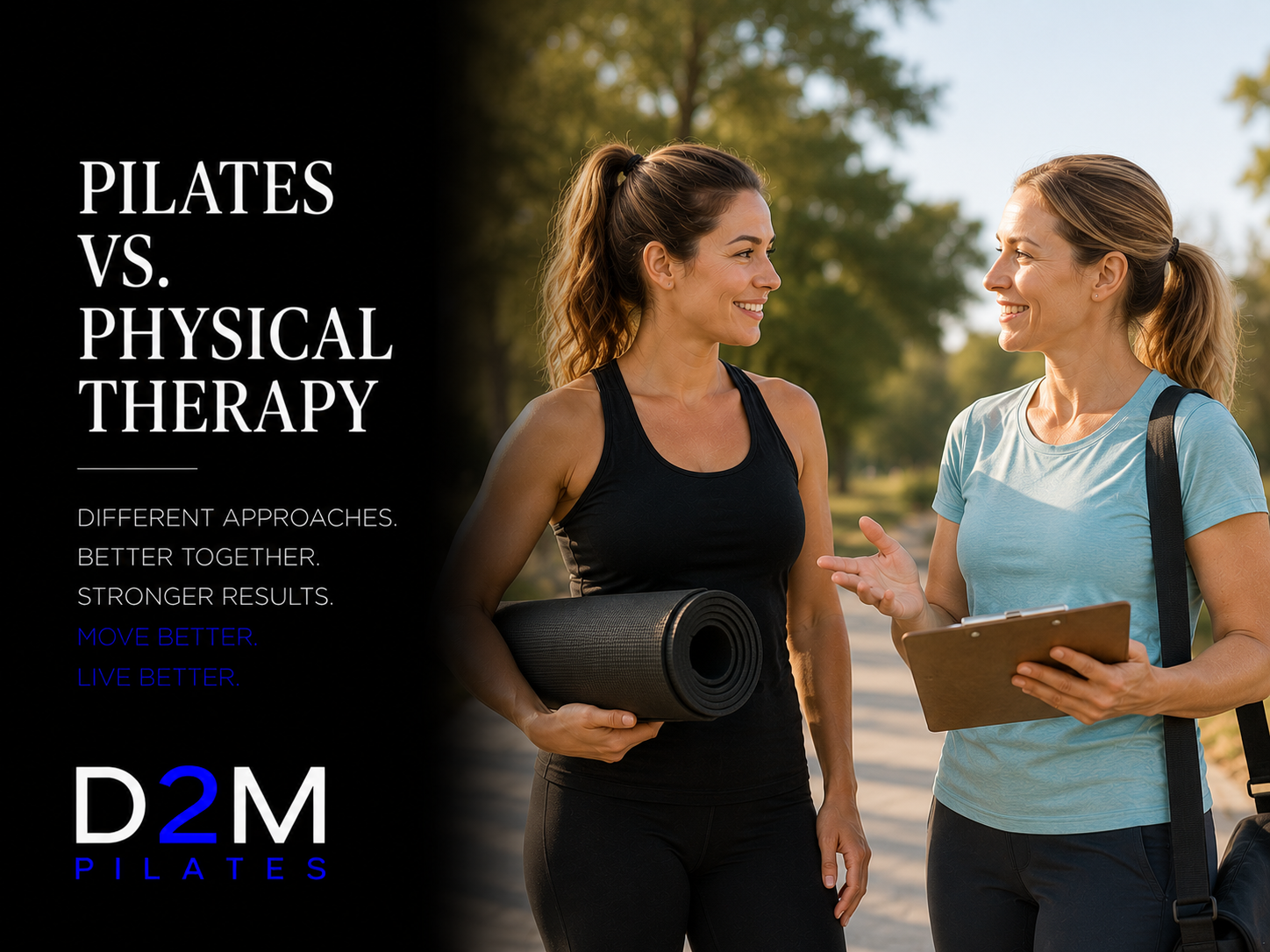
Physical therapy restores function.
Pilates restores capacity.
Physical therapy is a licensed medical discipline focused on acute recovery — restoring basic function, managing pain, and achieving the clinical discharge criteria that indicate safe return to normal activity. PT is typically time-limited, often insurance-driven, and focused on the injured area and its immediate restoration.
Post-rehabilitation Pilates picks up where physical therapy ends. When PT clears you to return to activity, you have usually restored basic function — you can walk without a limp, perform a basic range of motion, and manage daily tasks. What you have not necessarily restored is full neuromuscular capacity, kinetic chain integration, and the movement quality and confidence needed for the activities that matter to you.
The gap between PT discharge and complete recovery is where most people plateau — and where most re-injuries and compensatory conditions develop. Post-rehabilitation Pilates at D2M systematically closes this gap, restoring full structural capacity through progressive, individualized programming that goes far beyond what insurance-reimbursed PT can provide.
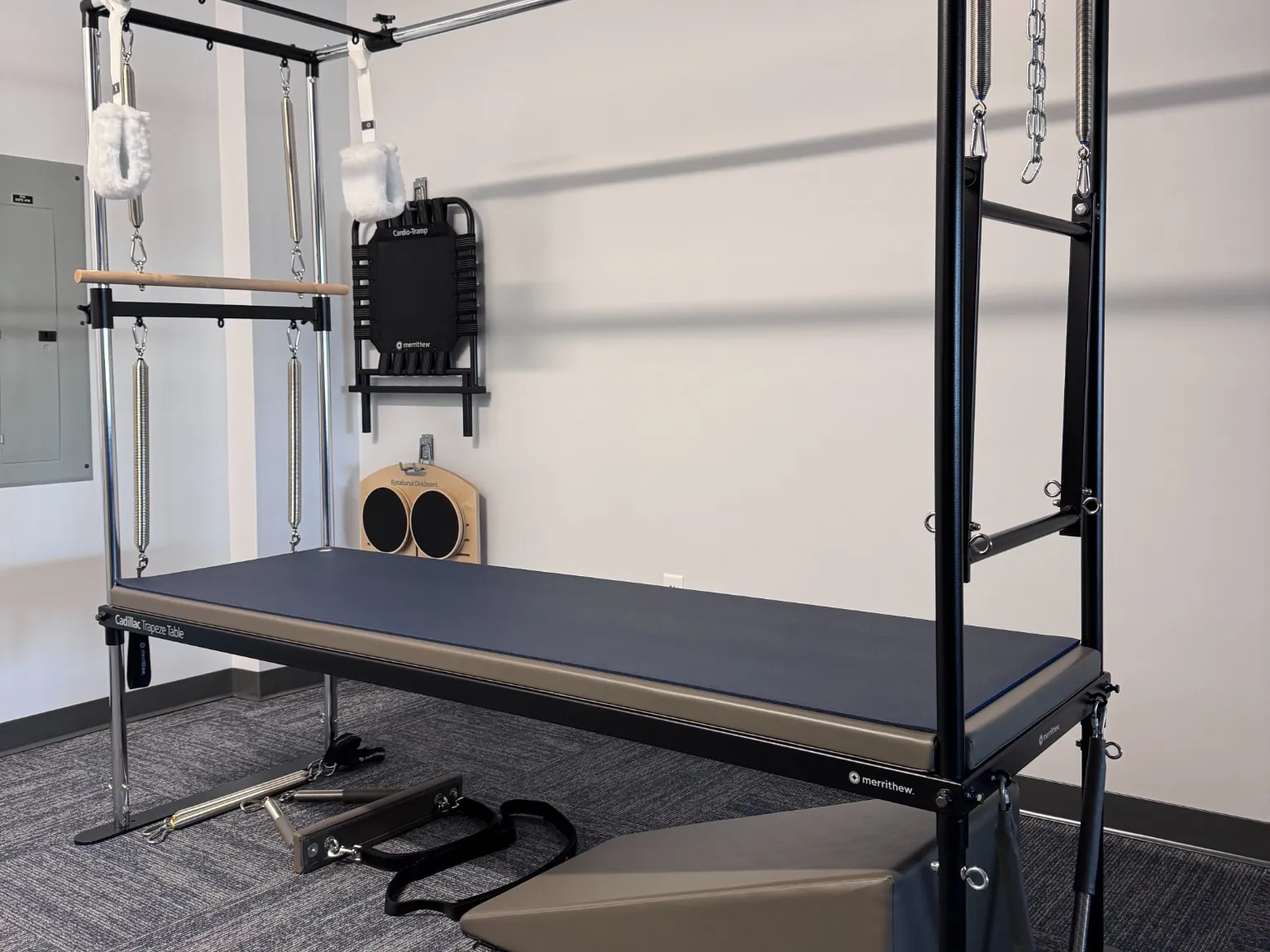
How Pilates and physical therapy compare
Physical Therapy Goal
Acute recovery, pain management, restoration of basic function, and achieving clinical discharge criteria within an insurance-authorized treatment episode.
Post-Rehab Pilates Goal
Full neuromuscular restoration, kinetic chain integration, sport-specific capacity, movement quality, and the structural resilience that prevents re-injury and recurrence.
Physical Therapy Approach
Typically clinic-based, using modalities, manual therapy, and standardized exercise progressions within insurance-authorized visit limits.
Pilates Approach
Studio-based, apparatus-driven, fully individualized programming — every session designed specifically for your body's current state and goals, with no standardized protocols.
When PT is Right
Acute injury and post-surgical recovery. PT provides the medical oversight, manual therapy, and acute-phase management that the immediate post-injury period requires.
When Pilates is Right
After PT discharge — or concurrently with PT for clients who want to accelerate recovery. Also for preventive maintenance, performance conditioning, and long-term movement health.
What most people miss after PT discharge
PT discharge ≠ full recovery
Clinical discharge criteria are set at functional adequacy, not full capacity. Most people leave PT stronger than when they arrived but weaker than they need to be for the life they want to live.
Compensatory patterns persist
Injuries create compensatory movement patterns that persist even after the original injury has healed. PT may not address the kinetic chain and movement quality issues that maintain these patterns.
Neuromuscular timing takes longer
Restoring the precise neuromuscular timing that produces safe, efficient movement takes longer than restoring basic strength and range of motion. Post-rehab Pilates addresses this directly.
Sport and performance gaps remain
The movement quality, strength, and kinetic chain integration required for athletics or physical work typically require more than standard PT programming can provide.
Re-injury risk stays elevated
Studies consistently show elevated re-injury risk when athletes return to sport near PT discharge — before the full restoration of movement quality and neuromuscular capacity.
D2M bridges the gap
Post-rehabilitation Pilates at D2M systematically closes the recovery gap — restoring the full structural capacity that PT begins but cannot always complete within its clinical framework.
Pilates vs physical therapy FAQ
Can I do Pilates instead of physical therapy?
Pilates is not a replacement for physical therapy in acute injury or post-surgical settings. PT provides licensed medical oversight, acute pain management, and manual therapy that Pilates cannot substitute. Pilates is most valuable after PT — picking up where clinical treatment ends and restoring full functional capacity.
Can I do Pilates and physical therapy at the same time?
Yes — and this combination is often highly effective. PT manages the acute phase and provides medical oversight; Pilates addresses broader movement quality, kinetic chain function, and the structural foundation that accelerates PT progress.
Does D2M work with physical therapists?
Yes. D2M is happy to coordinate with your physical therapist, receiving PT notes, respecting all precautions and restrictions, and communicating progress back to your clinical team when appropriate.
How is a STOTT post-rehabilitation specialist different from a PT?
A physical therapist is a licensed medical professional trained in acute injury management, manual therapy, and clinical rehabilitation. A STOTT PILATES Post-Rehabilitation Specialist is a movement professional trained to bridge PT discharge and full functional recovery through evidence-based Pilates programming. They are complementary disciplines, not competing ones.
My insurance covers PT but not Pilates. Is it still worth it?
Yes. Post-rehabilitation Pilates addresses the full restoration of movement quality and functional capacity that insurance-limited PT cannot always complete. Most clients consider it among the highest-return health investments they have made — preventing re-injury, restoring performance, and building long-term structural resilience.
How do I know if I need post-rehabilitation Pilates?
If you have been discharged from PT but still feel weak, uneven, or not fully back to the activities you want to do — that gap is exactly what D2M is designed to close. A single assessment session will identify what remains to be restored and build a program around it.
PT started your recovery. Let's finish it.
Book a post-rehabilitation session at D2M and begin with a full movement assessment. We will take you from PT discharge to complete functional restoration.