Smoother stroke.
Stronger engine.
Less breakdown.
Pilates programming for swimmers and triathletes — shoulder stability, rotational power, breathing efficiency, and hip flexor mobility for performance gains in the water and across all three disciplines.
Book a Session →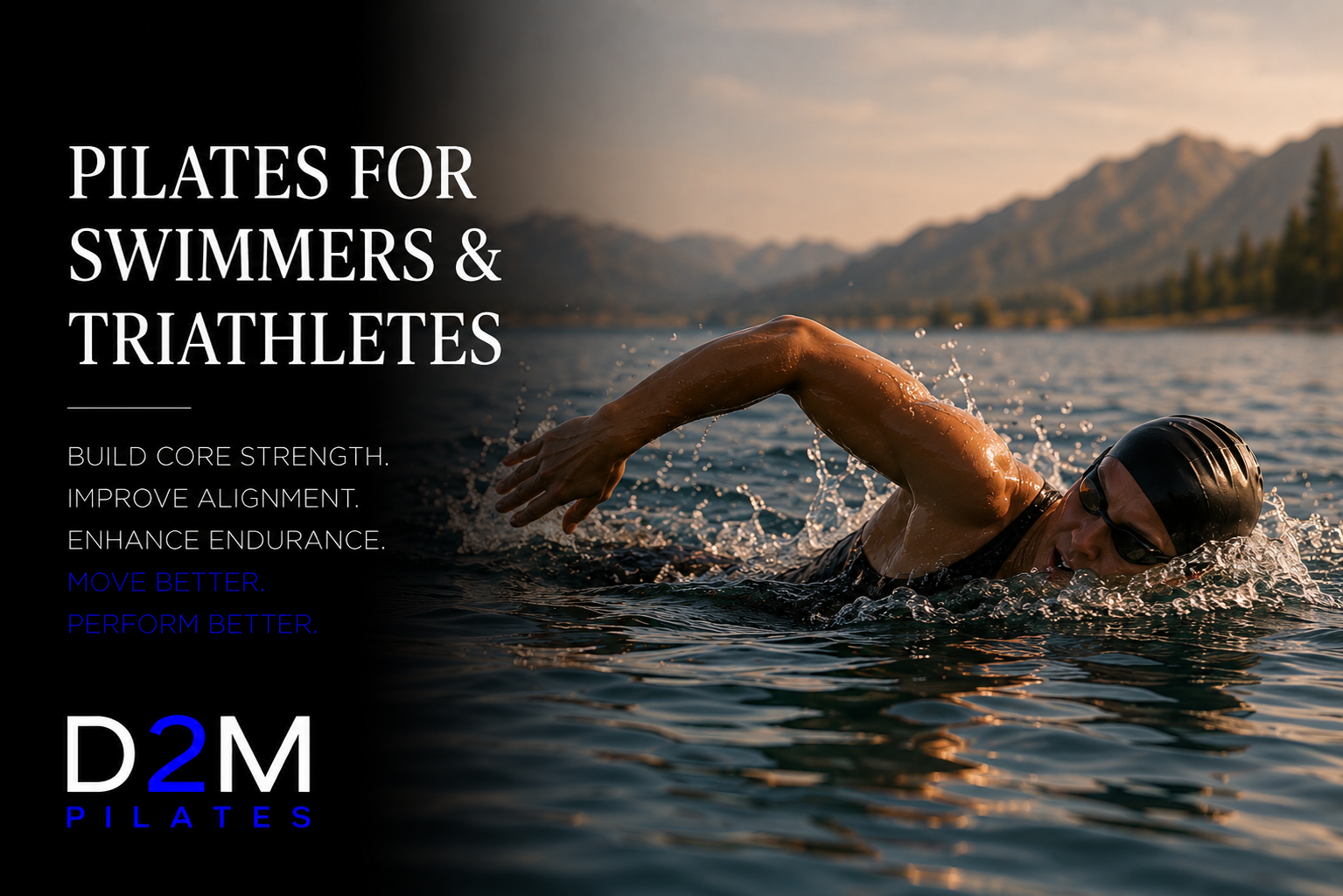
Swimming is a rotation sport that destroys shoulders and hips.
Elite swimming performance comes from rotational efficiency — the ability to transfer power from the core through the shoulder complex to the water with minimal energy leakage. The swimmers who struggle are not always the least fit. They are the ones whose rotational mechanics, shoulder stability, and breathing patterns are breaking down under training load.
For triathletes, the demands multiply. Hip flexors shortened by cycling restrict running mechanics. Shoulders loaded by swimming affect bike position. The transitions between disciplines amplify every movement inefficiency. A clinical Pilates program designed around all three disciplines addresses the whole athlete, not just one event.
At D2M, swimmer and triathlete programming is built around sport-specific movement analysis — identifying the shoulder mechanics, hip mobility patterns, breathing restrictions, and core stability deficits that are limiting performance or building toward injury.
Swim and triathlon deficits Pilates corrects
Shoulder Complex Stability
Rotator cuff coordination, scapular stabilization, and glenohumeral rhythm — the three foundations of shoulder health in swimming, addressed systematically and specifically.
Rotational Efficiency
Core-driven rotation that powers the freestyle stroke, improves body roll mechanics, and transfers force to the water without the energy leakage of poor pattern quality.
Breathing Mechanics
Pilates breathing work improves thoracic mobility, intercostal expansion, and the respiratory efficiency that determines sustainable swimming pace at every distance.
Hip Flexor Mobility
Cycling-shortened hip flexors restrict running stride length and load the lumbar spine on the run leg. Pilates hip flexor release is a game-changer for triathlete run performance.
Bilateral Balance
Swimmers develop dominance asymmetries from one-sided breathing patterns. Pilates identifies and corrects bilateral imbalances that affect stroke efficiency and injury risk.
Structural Endurance
The ability to maintain optimal posture and movement pattern across a 3.8km swim, 180km bike, and 42km run requires structural endurance that Pilates builds directly.
What swim and triathlon Pilates delivers
Shoulder longevity
Swimmer's shoulder is the most common overuse injury in aquatic sport. Pilates shoulder stability work prevents the rotator cuff breakdowns that end seasons and careers.
Faster stroke mechanics
Improved rotational efficiency and shoulder stability produce measurable stroke improvement — more power per stroke with less energy expenditure.
Better run performance off the bike
Releasing cycling-shortened hip flexors through Pilates directly improves running stride length and mechanics — one of the most underestimated performance gains in triathlon.
Multi-sport resilience
Athletes training across three disciplines are exposed to three times the injury risk. Pilates builds the structural resilience to absorb multisport training volume.
Breathing efficiency
Improved thoracic mobility and breathing mechanics increase oxygen efficiency — allowing higher sustainable pace across all three triathlon disciplines.
Injury-free training blocks
Consistent Pilates maintenance is the single most effective tool for protecting long training blocks from the overuse injuries that derail triathlon preparation.
Swimming & triathlon Pilates FAQ
How does Pilates help swimming performance?
Pilates improves the shoulder stability, core rotation, and breathing mechanics that directly determine swimming efficiency. Most swimmers experience measurable improvements in stroke quality, breathing comfort, and shoulder health within weeks of consistent Pilates work.
Can Pilates help triathlete run performance?
Yes — significantly. Hip flexor mobility gained through Pilates directly improves running stride mechanics after the bike. This is one of the highest-return improvements available to triathletes.
Is Pilates appropriate during heavy training blocks?
Yes. D2M sessions are periodized around your training calendar. During high-volume blocks, sessions focus on maintenance and recovery rather than high-load conditioning — protecting your body during the periods when training stress is highest.
Will Pilates interfere with my swimming training?
No. Pilates sessions are designed to complement your swim training, not compete with it. Most athletes find that Pilates improves recovery quality and reduces the accumulated tension that heavy swim training creates.
Can Pilates help with swimmer's shoulder?
Yes. Swimmer's shoulder is almost always driven by rotator cuff coordination deficits, scapular instability, and stroke asymmetries — all directly addressed by Pilates. Most swimmers experience significant improvement in shoulder pain and function within a dedicated programming block.
Is Pilates useful for open water swimmers as well as pool swimmers?
Yes. Open water swimming adds sighting, buoy turns, and wetsuit restrictions to the physical demands. Pilates thoracic mobility and shoulder stability work translates directly to open water performance and reduces the asymmetric loading that open water adds.
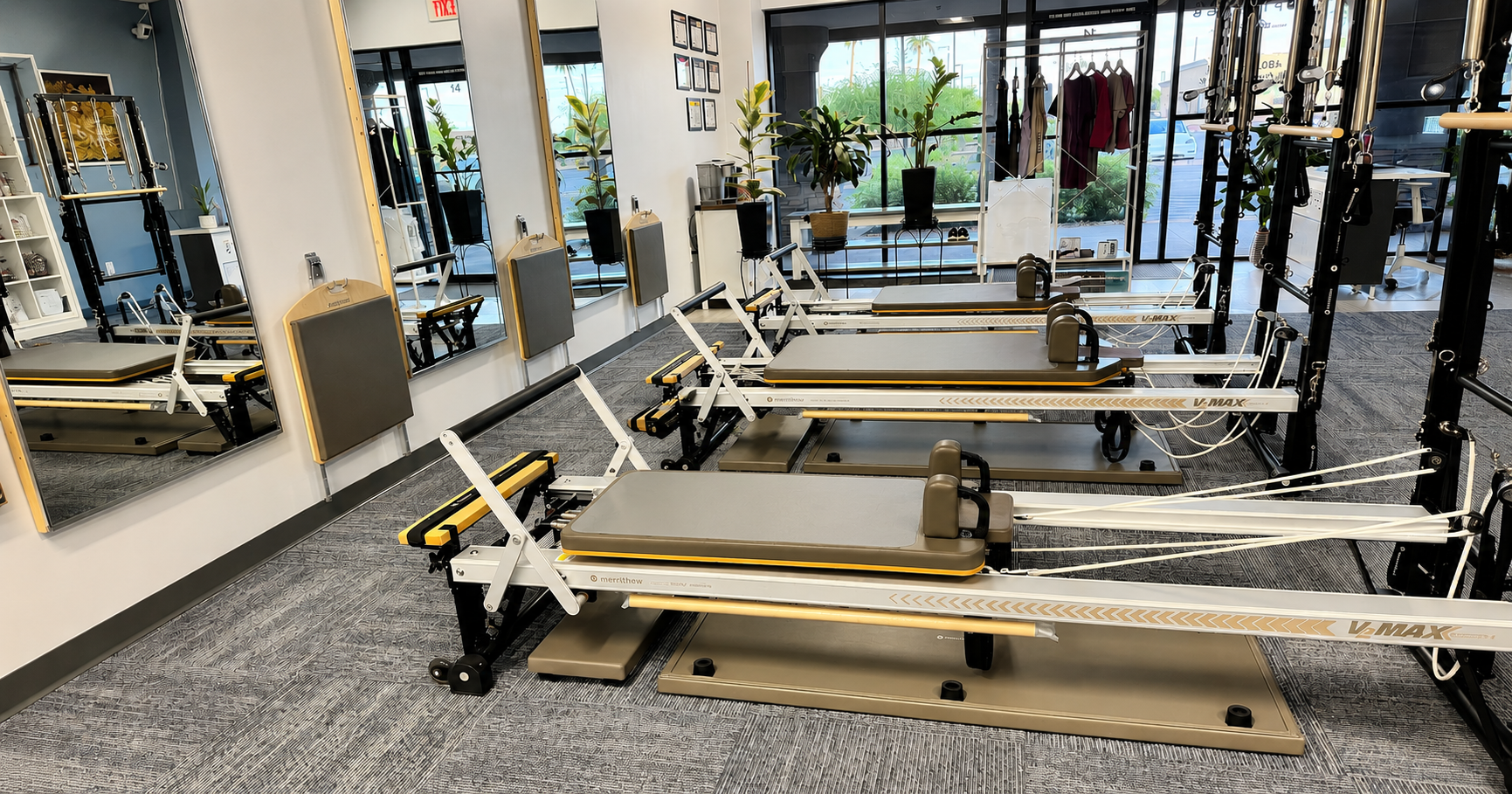
Faster in the water starts on the reformer.
Book a swim and triathlon movement assessment at D2M and discover the shoulder stability and rotational efficiency gains available in your stroke.