Higher vertical.
Quicker lateral.
Healthier knees.
Clinical Pilates programming built for basketball — vertical power, lateral quickness, ankle and knee resilience, and the single-leg deceleration control that keeps players on the court through a full season.
Book a Session →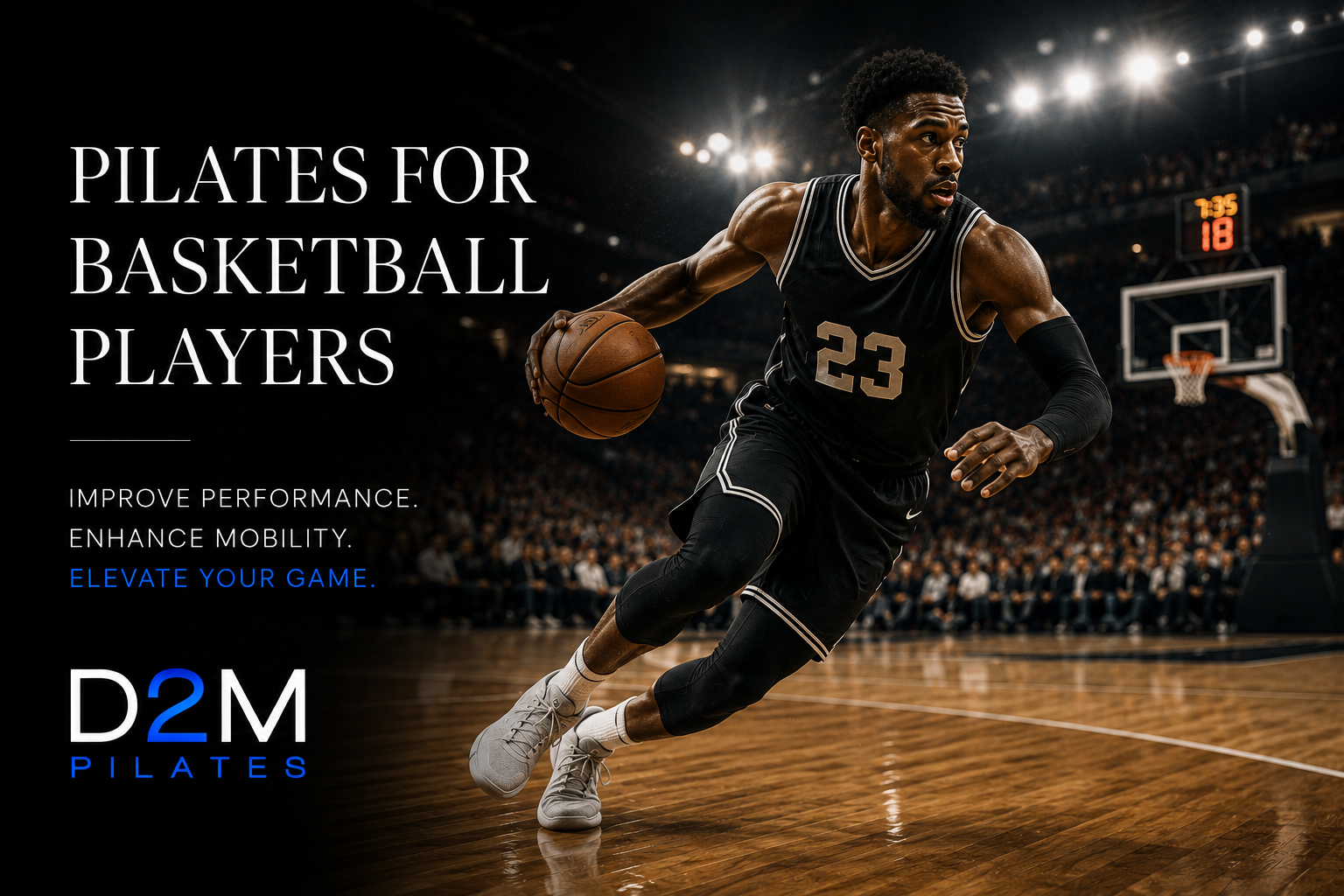
Basketball is a vertical and lateral sport that destroys ankles and knees.
Basketball is one of the most physically demanding court sports — combining explosive vertical jumps, repeated lateral cuts, full-speed deceleration, and the contact demands of defending and posting up across 82 regular season games plus playoffs. The injury rate reflects this: ankle sprains, patellar tendinopathy, ACL tears, and stress fractures are among the most common season-ending conditions.
The movement deficits that drive these injuries — weak hip abductors, poor single-leg landing mechanics, restricted ankle dorsiflexion, quad-dominant deceleration patterns — are precisely the deficits that Pilates addresses. The athletes who stay healthy across a long season are not the lucky ones. They are the ones whose movement mechanics are sound enough to absorb the demands the sport places on their bodies.
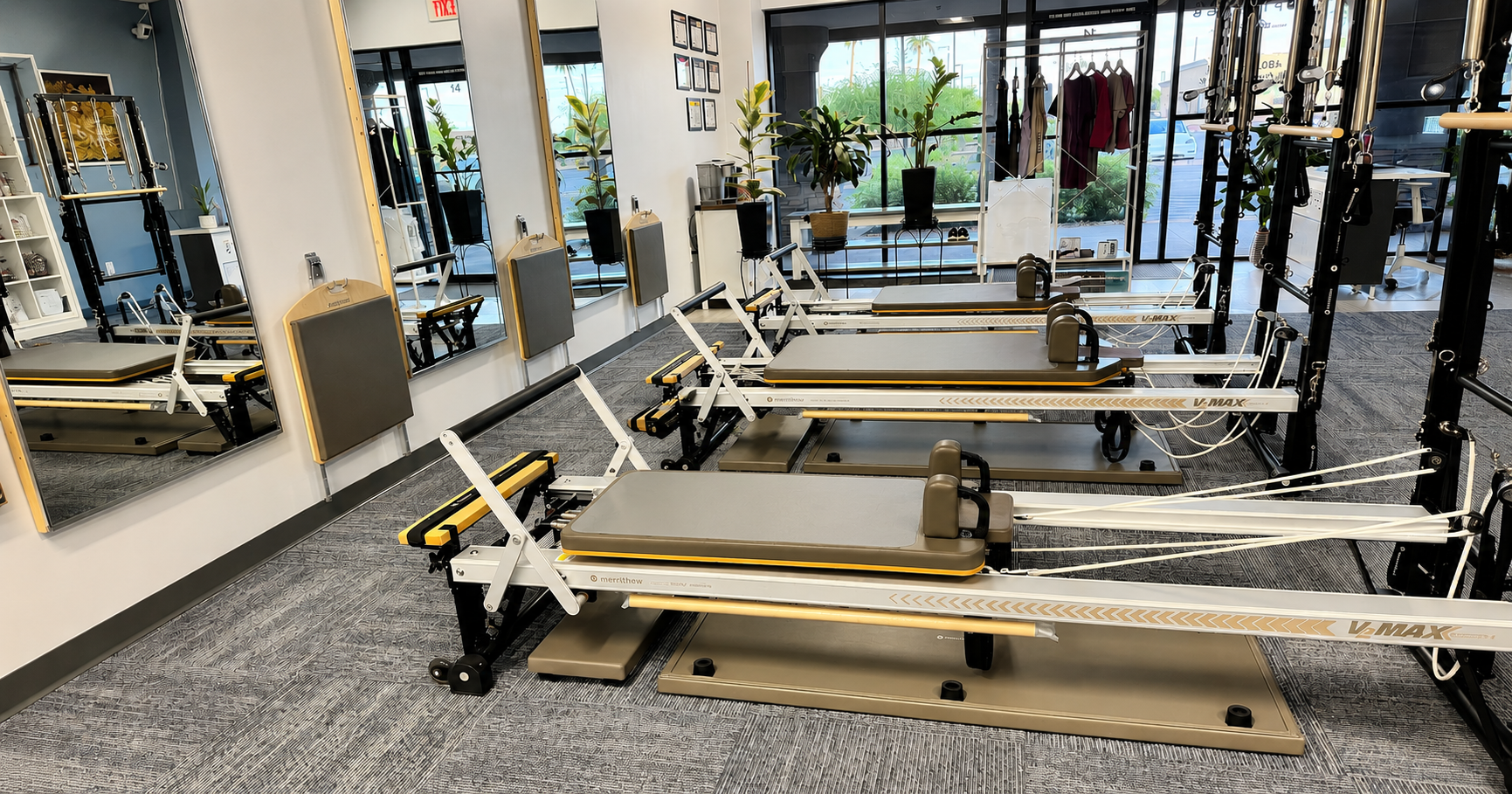
At D2M, basketball programming is built around the specific movement patterns of the sport — the single-leg landing after a jump shot, the lateral defensive slide, the explosive first step on a drive, and the contact absorption of a screen or post move. Every program is individualized, position-informed, and periodized around the playing calendar.
Basketball movement deficits Pilates corrects
Single-Leg Landing Mechanics
The majority of basketball ACL injuries occur during single-leg landing. Pilates builds the hip stability, eccentric quad control, and neuromuscular timing that produces safe landing mechanics at game speed.
Lateral Deceleration Control
Defensive slides, closeouts, and direction changes require eccentric hip and lateral chain strength. Pilates builds these precisely — reducing the ankle and knee loads that produce sprains and ligament injuries.
Vertical Power and Repeatability
Explosive hip extension, glute activation, and elastic energy storage determine jump height and repeatability across a full game. Pilates builds the proximal stability that maximizes power transfer from the ground up.
Ankle Stability and Proprioception
Ankle sprains are the most common basketball injury and have a very high recurrence rate. Pilates single-leg proprioceptive training and peroneal strengthening rebuilds the ankle stability that prevents first and recurrent sprains.
Hip Abductor Strength
Weak hip abductors cause knee valgus on every landing and lateral movement — the single greatest predictor of patellar tendinopathy and ACL injury in basketball. Pilates targets these directly.
Rotational Core Stability
Post moves, crossover drives, and defensive rotations all require precise rotational core control. Pilates builds the deep stabilizer co-contraction that powers and protects these movements.
What basketball Pilates delivers
Improved vertical leap
Optimizing hip extension mechanics, glute activation, and elastic energy storage through Pilates produces measurable vertical improvement without additional plyometric volume.
Faster lateral movement
Hip abductor strength and lateral chain power determine defensive slide speed and offensive agility. Pilates builds these with the specificity that court movement demands.
Ankle injury prevention
Pilates proprioceptive training and peroneal strengthening is one of the most effective evidence-based approaches to ankle sprain prevention — the most common injury in the sport.
Knee health across a long season
Patellar tendinopathy and patellofemoral pain are largely preventable with appropriate hip stability and landing mechanics work — the foundation of D2M basketball programming.
Better energy efficiency
When movement patterns are mechanically optimal, less energy is wasted in compensatory movement — allowing players to sustain higher performance levels across 48 minutes and back-to-back games.
Faster recovery between games
The fascial release, breathing mechanics, and parasympathetic activation of Pilates sessions accelerates the tissue recovery that a compressed NBA or college schedule demands.
Basketball Pilates FAQ
Can Pilates improve my vertical jump?
Yes. Vertical jump height is determined by hip extension power, glute activation, and elastic energy storage — all of which Pilates addresses directly. Most athletes see measurable vertical improvement after a dedicated Pilates conditioning block.
Can Pilates help with patellar tendinopathy (jumper's knee)?
Yes. Patellar tendinopathy in basketball is driven by quad dominance, hip abductor weakness, and landing mechanics that overload the patellar tendon. Pilates addresses all three — and the progressive tendon loading protocols D2M uses are evidence-based for tendinopathy rehabilitation.
How does Pilates fit into an NBA or college training program?
Pilates integrates alongside existing S&C, skill work, and recovery protocols. Most basketball athletes use 1–2 sessions per week in the off-season for conditioning and 1 session per week in-season for maintenance and injury prevention.
Is Pilates appropriate for youth basketball players?
Yes — and early investment in movement quality produces compounding returns. Youth athletes who develop sound landing mechanics, hip stability, and body awareness through Pilates build the foundation that supports their development through high school, college, and beyond.
The court advantage starts off the court.
Book a basketball movement assessment at D2M and discover the vertical power, lateral quickness, and injury resilience gains waiting in your mechanics.