Return stronger.
Not just returned.
Clinical Pilates for ACL recovery, rotator cuff repair, labral tears, and tendon injuries — restoring full kinetic chain function and athletic capacity, not just the ability to walk without pain.
Book a Session →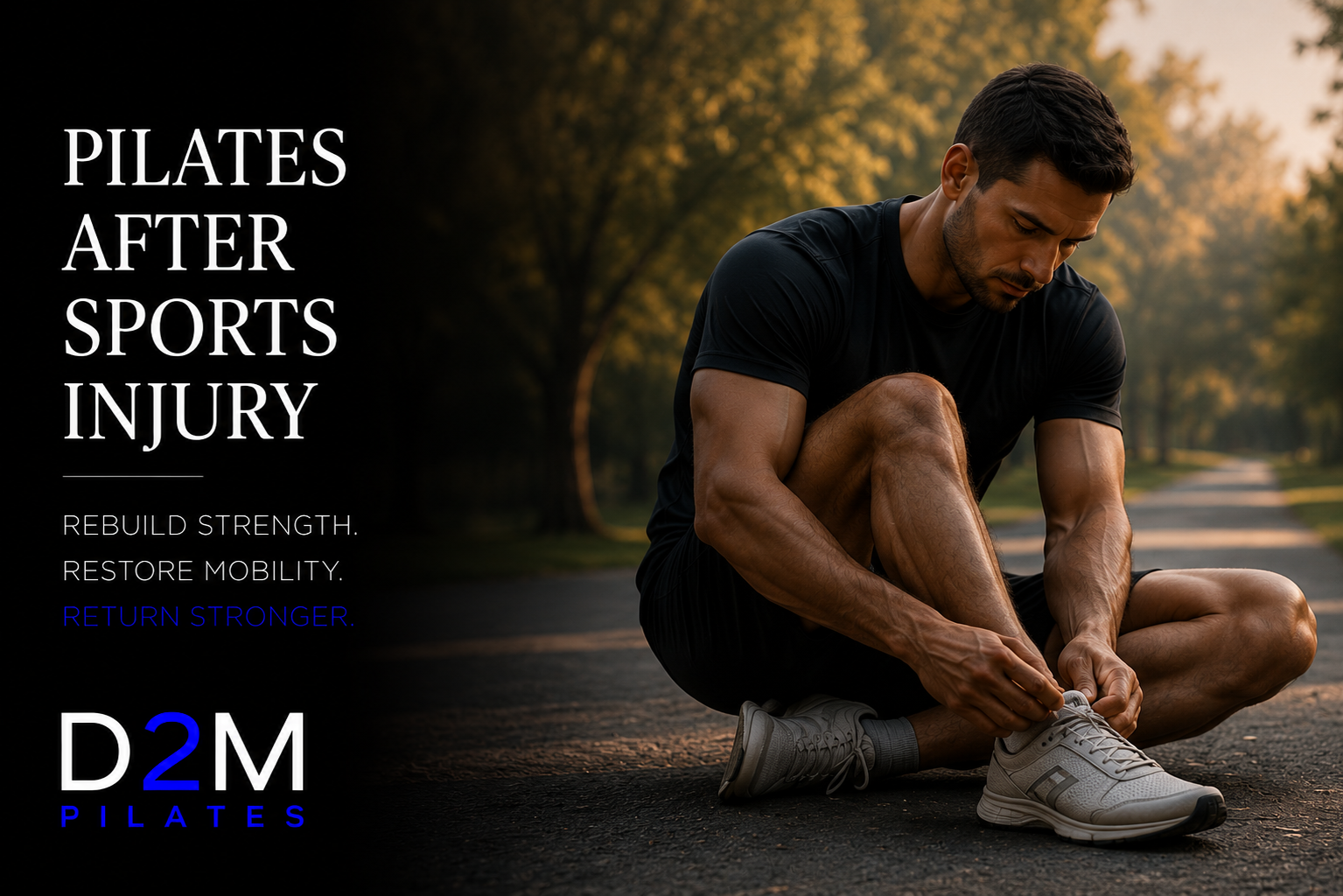
Cleared to return is not the same as ready to perform.
Sports injury rehabilitation has a well-documented gap. Physical therapy restores basic function and achieves clinical discharge criteria. But discharge criteria — walking without a limp, passing a hop test, regaining basic range of motion — are not the same as the full kinetic chain integration needed to compete.
The athletes who return to their sport and stay healthy are those who closed this gap completely before returning. Post-rehabilitation Pilates at D2M is the bridge between clinical discharge and full athletic readiness.
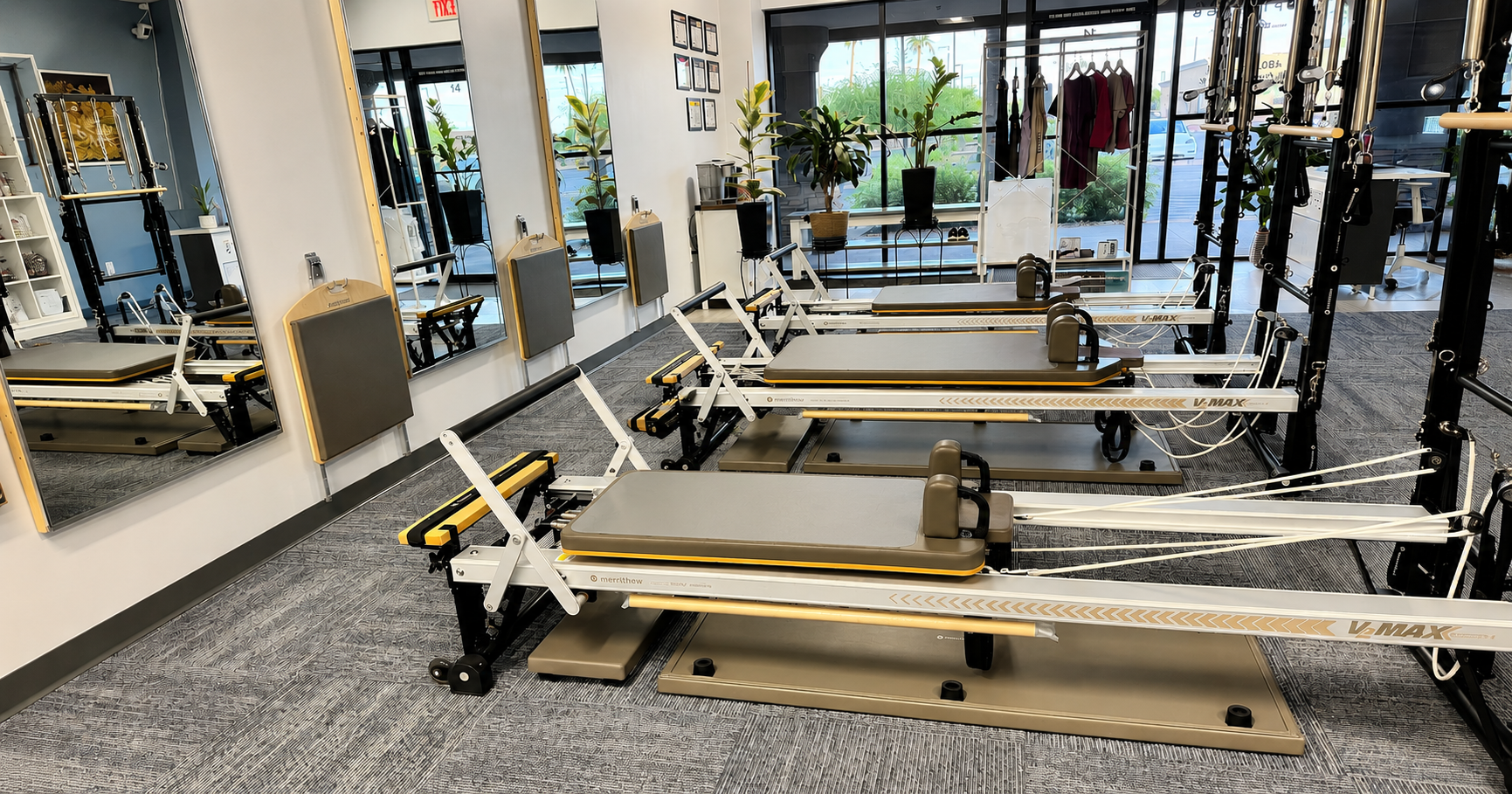
Using the STOTT apparatus suite, Devi builds sport-specific return-to-function programs that restore the neuromuscular timing, kinetic chain sequencing, and movement quality your sport demands — at the right load, the right range, and the right progression for your specific injury.
Sports injuries D2M programs for
ACL Reconstruction
Progressive return-to-function after ACL reconstruction — quad reactivation, hamstring-quad ratio restoration, single-leg landing mechanics, and sport-specific loading before competition return.
Rotator Cuff Repair
Rotator cuff coordination, scapular stabilization, glenohumeral rhythm restoration, and progressive overhead loading from early post-surgical stage to full athletic return.
Hip Labral Tear
Hip labral tear recovery that restores deep hip stability, addresses the movement pattern that caused the injury, and rebuilds sport-specific hip loading capacity.
Shoulder Labral Tear
Dynamic stabilization, rotator cuff coordination, and capsular integrity needed for overhead and throwing sports — built back systematically after shoulder labral repair.
Tendon Repair & Tendinopathy
Progressive tendon loading following Achilles, patellar, or quadriceps tendon repair — using evidence-based loading protocols that drive optimal tendon remodeling.
Ankle and Foot Injuries
Single-leg proprioception, tibialis posterior strengthening, and progressive return-to-sport loading after ankle sprains, stress fractures, and foot surgery.
What sports injury Pilates restores
Kinetic chain re-integration
Sports injuries disrupt the kinetic chain above and below the injury site. Pilates systematically re-integrates the entire chain — so your knee, hip, and trunk work together again.
Neuromuscular timing
Injury disrupts the neuromuscular timing that produces safe, powerful athletic movement. Pilates rebuilds the precise motor patterns needed for sport-specific demands before return.
Eccentric strength
Most sports injuries occur during eccentric loading — deceleration, landing, direction change. Pilates apparatus training allows precise eccentric loading for every recovery stage.
Bilateral symmetry
Asymmetry between the injured and healthy side is one of the strongest predictors of re-injury. D2M programs address side-to-side differences before clearing for return to sport.
Re-injury prevention
Most re-injuries happen because the underlying movement dysfunction was never corrected. D2M programs address the root cause, not just the repaired tissue.
Return readiness and confidence
Psychological readiness to return to sport is as important as physical readiness. Progressive loading builds the movement confidence that full athletic participation requires.
Sports injury Pilates FAQ
When can I start Pilates after ACL surgery?
Most ACL reconstruction clients begin post-rehabilitation Pilates at 8–12 weeks post-surgery with physician and PT clearance. Early-stage programming focuses on neuromuscular reactivation and proximal stability rather than knee loading.
Can Pilates reduce the risk of re-injury?
Yes. By addressing the movement dysfunctions and kinetic chain deficits that contributed to the original injury, post-rehabilitation Pilates significantly reduces re-injury risk compared to returning directly from PT discharge.
Can I do Pilates alongside my physical therapy?
Yes — and this combination is often more effective than either alone. PT addresses acute recovery; Pilates addresses broader kinetic chain function. D2M coordinates with your PT when appropriate.
Can Pilates help with recurring injuries?
Yes — recurring injuries are one of the strongest indications for post-rehabilitation Pilates. Recurrence almost always means the original movement dysfunction was never fully corrected. D2M programs identify and address the root cause systematically.
How long does post-rehabilitation Pilates take after ACL surgery?
Most ACL clients work with D2M for 3–6 months to achieve full kinetic chain restoration and sport-specific readiness. The timeline depends on your sport, position, pre-injury conditioning, and consistency of training.
Don't just recover. Return ready.
Book a session at D2M and start with a full movement assessment. We will build a return-to-sport program specific to your injury, your sport, and your timeline.